

CPF’s Downtown Revitalization Initiative Proposal: Accessible Trails for All
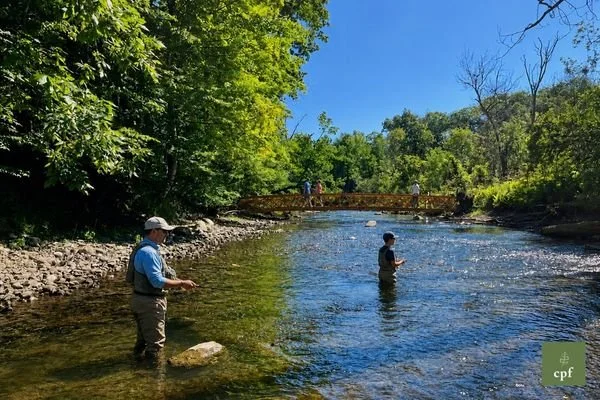
This artistic rendering depicts the conceptual design of a pedestrian footbridge over Chittenango Creek—part of the project area described under “5. A New Loop Trail,” below.
Image by Matthew D. Vredenburgh Landscape Architecture
Imagine starting your morning walk in downtown Cazenovia, pausing to learn about the village’s industrial history, crossing a bridge over Chittenango Creek, walking along an accessible trail through the Willow Patch, stopping at a pollinator garden to learn about native plants, and eventually continuing onto trails leading into the surrounding countryside.
For years, this has been CPF’s vision: creating a network of trails and greenspaces throughout Cazenovia and along the Chittenango Creek corridor that connects in the heart of the community.
Today, CPF manages and maintains 14 miles of public-access trails in four areas—the Gorge Trail, South Trail, Willow Patch and Carpenter’s Pond trails, and the Burlingame-Fairchild trail system. Each offers a unique way to experience Cazenovia’s landscape, history, and natural resources. The challenge is that these trail systems are separated. CPF is working toward building a 20+ mile network of interconnected trails along former railroads and Chittenango Creek, with potential to eventually connect New Woodstock to Chittenango Falls State Park.
Building a Network
In 2024, CPF completed the first phase of its trail connectivity plan with the creation of the Gorge Trail Gateway on Albany Street. The project added a pedestrian crosswalk, dedicated bicycle and pedestrian entrance, timber stairs to new creekside trails, and streambank stabilization.
When the Village of Cazenovia was selected as the CNY region’s Round 9 recipient of New York State’s $10 million Downtown Revitalization Initiative (DRI) grant, CPF saw an opportunity to advance the next phase of this vision.
CPF has submitted a proposal for a major trail connectivity project as part of Cazenovia’s DRI planning process. The goal is straightforward: connect Cazenovia’s trails while making them safer, more accessible, and more welcoming to people of all ages and abilities.
The proposed improvements include ADA-compliant ramps, improved trail surfaces, boardwalks, bridges, safer pedestrian crossings, seating, interpretive signs, and educational kiosks. Together, these features would connect people not only to one another, but also to Cazenovia’s history, waterways, and wildlife.
Five Places. One Connected Vision
CPF’s proposal focuses on five project areas, or “nodes,” where connections could be created.
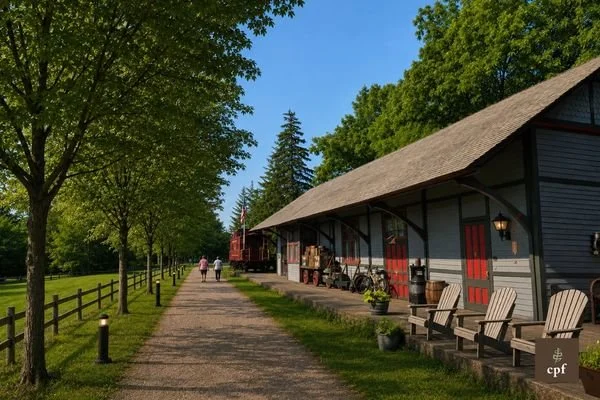
Artistic depiction of the proposed trail design on the east side of the Lehigh Valley Trail Depot (facing south, toward William St)—described under “1. Train Depot to Trestle Bridge.”
Image by Matthew D. Vredenburgh Landscape Architecture
1. Train Depot to Trestle Bridge: Improvements between William Street and the trestle bridge to the north would create a safer, more enjoyable section of the Gorge Trail. Plans include a new pedestrian crossing, improvements to the historic railroad trestle, and approximately 800 feet of new stone-dust trail. A welcoming rest area near the Lehigh Valley Train Depot would include wayfinding signs, lighting, seating, landscaping, a public restroom, and an information kiosk highlighting the railroad and creek’s role in Cazenovia’s history. (See image on page 3.)
2. Making the Willow Patch More Accessible: This unique wetland ecosystem, home to many species, is located just south of downtown. The proposal would create an accessible entrance from Mill Street, improve approximately 2,400 feet of existing trail surfaces, and add benches and interpretive signs. Visitors could learn about the area’s natural habitat, former history as a mill pond, its willow-weaving heritage, and the resident beavers while enjoying a more accessible trail.
3. Reimagining the Pollinator Garden at Willow Place: The Willow Place entrance near Carpenter’s Pond would become another welcoming gateway. Proposed improvements include accessible paths and gates, new fencing, defined pollinator garden beds, native plantings, identification signs, educational exhibits, and seating. The garden would provide an outdoor classroom focused on native plants, pollinators, habitat, and sustainable landscaping.
4. A New Bridge at Lake Weir Dam: A proposed pedestrian bridge across the Cazenovia Lake outlet would create another important trail connection and provide an opportunity to highlight Cazenovia’s historic relationship to the Erie Canal feeder system. The bridge landing could also serve as the starting point for a future connection to existing CPF trails to the south.
5. A New Loop Trail: This approximately 4,000-foot loop would include stone-dust trails, boardwalks, a second bridge over Chittenango Creek, a fishing platform, benches, and interpretive signs about the creek watershed and fish habitat. The new trail would offer opportunities for walking, bicycling, fishing, and wildlife observation.
More Than Just a Trail
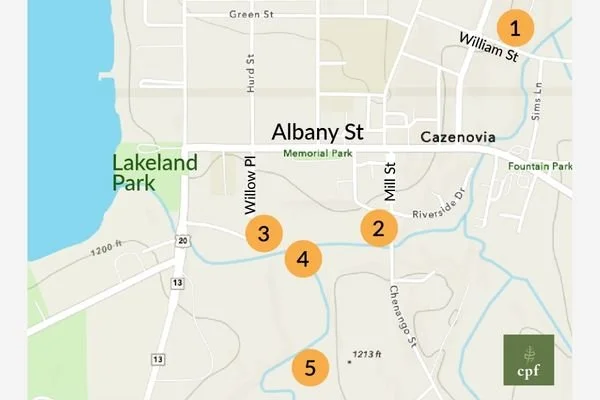
The proposed trail project areas are clustered around the Village.
Together, the plan for these five areas would create much more than just a series of trail improvements. It would connect the village center with the outdoors, connect neighborhoods with recreational spaces, and connect visitors with Cazenovia’s history and natural landscape. This enhanced trail system could also benefit local businesses—drawing nature enthusiasts who take the opportunity to spend time downtown shopping, dining, and exploring, before or after their outdoor adventures.
What Happens Next?
CPF’s proposal is one of several projects being considered through Cazenovia’s DRI planning process. The Local Planning Committee is currently evaluating and refining projects to determine which will be included in its Strategic Investment Plan for submission to New York State.
Following its review of the Strategic Investment Plan, New York State will determine which projects receive funding. Project selections are expected to be announced in 2027.
If selected, CPF’s proposal would build on the trail work already completed, expand accessibility, and bring Cazenovia closer to realizing a long-held vision: an interconnected trail network that links people, places, history, and nature.
Learn more about the Village of Cazenovia Downtown Revitalization Initiative.